ARTWORK · 179-180-181
The Three Moons
Medium
Oil on canvas
Year
2012
Dimensions
varie
Availability
Private collection
Category
The Universe: the Moon, Stars, Nebulae and Galaxies (2011–2020)
THE THREE NEW RED QUARTERS
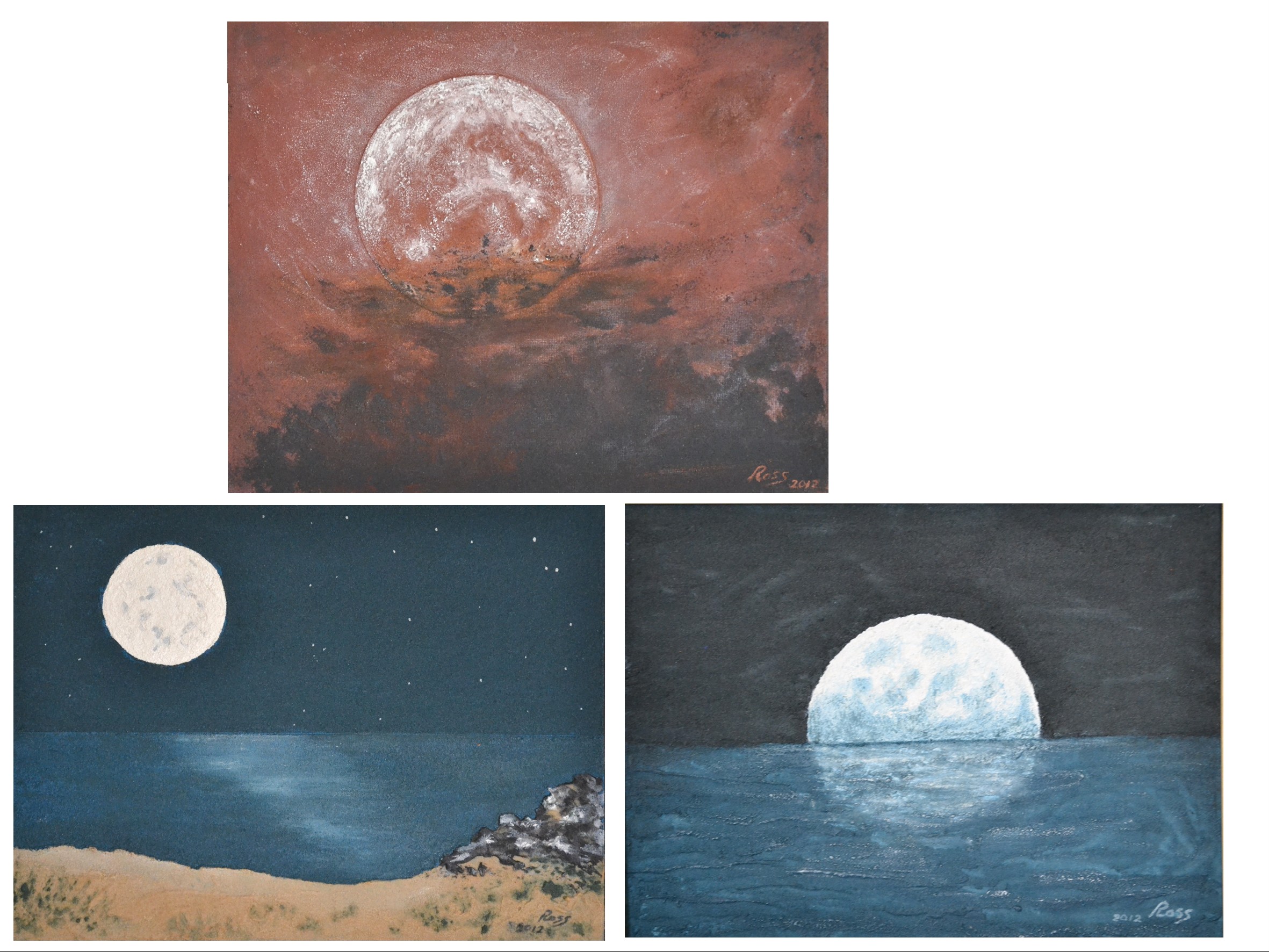
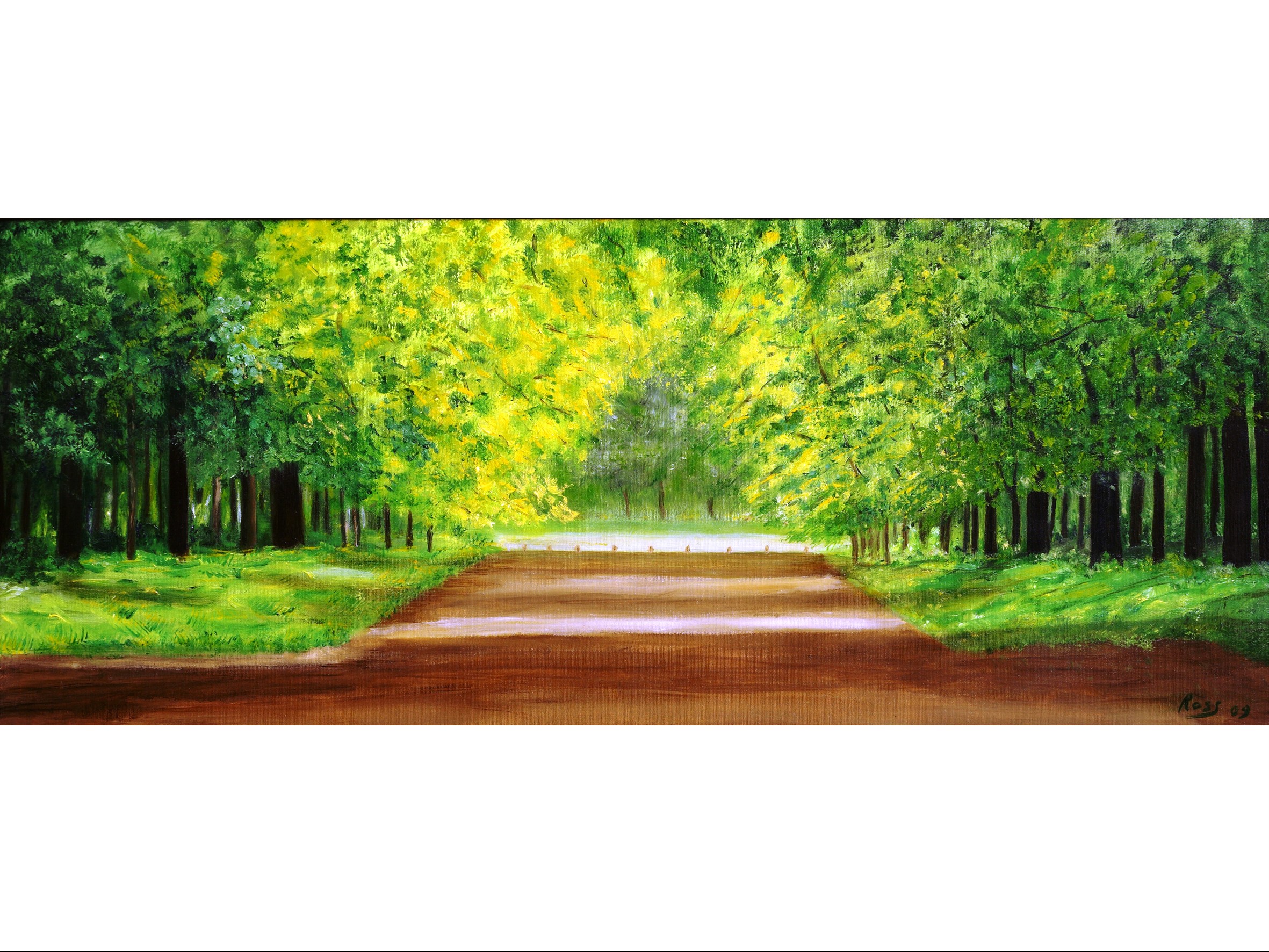
The Rossian workshop has produced new works for a Christmas exhibition. These are three small paintings dedicated to the moon, which involves a significant step back astronomical. Ross, who started from a quiet and loving immersion in the Lombard landscape of which he sang waters, skies, trees and flowers, shadows and secret caverns, began to find too narrow his own field of observation and climbed in the company of Halley and Copernicus among the stars, painting galaxies, novae and supernovae, star explosions and lights that came to us when the celestial sphere that had produced them had disappeared into the immense cosmic crucible.
During this first exploration Ross had skipped the Moon. What is the Moon? a province of the Earth, too close to be interesting. But then came a second thought: more than Halley, it is appropriate to say, Leopardi and Novalis could. Just inspired by visions of written poetry, his painted poetry was born, a magnificent compromise between the high of the heavens and the limited horizon of our planet.
Of the Moon we can admire three versions, two lyrics and one dramatic: the Plenilunium, that is the moon that illuminates of pearl rays the immote surface of the waters near a lido; the red moon, intense vision of a bright globe in the night with reddish and bloody colors, the colors that the Indians of the great American prairies called with a thrill of sacred terror Comanc moon, whose nightlight was complicit in any evil magic, of any crime; and the reassuring blue moon, which seems to constitute the trait-d'union between the earth and its satellite with that vivid and transparent appearance that confuses its color with the blue of the water from which it seems miraculously rise.
Almost superfluous to note that the triptych represents not a turning point, but certainly a significant element of novelty that is part of the best moments of the operosity of Rosanna Balzarini.
Aldo Maria Pero
The Art Movement of the 21st century (2012)