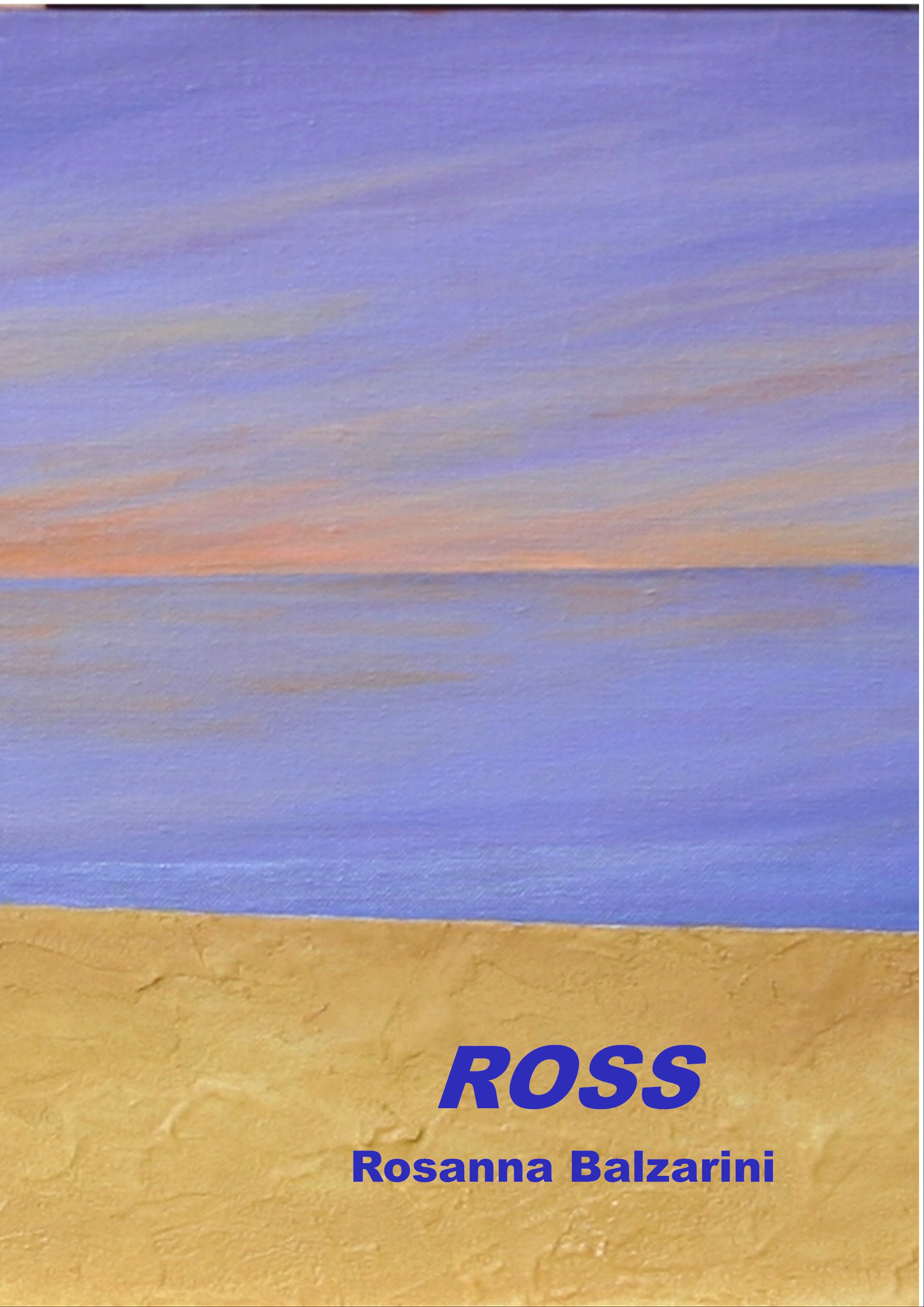
The Life and Works of Rosanna Balzarini
Coming in 2026
“Telling the story of a person’s life is difficult. Perhaps a poet, a writer or a historian could do it, but any account would be incomplete: it is impossible to explore fully the tangle of passions and feelings, the intricate structure that makes up each life. No one can draw a convincing portrait even of their own existence.” (M. Suardi)
I used this quotation in the text Rosanna had asked me to write as an introduction to the volume that was to bring together her entire body of work—in essence, her life—before she passed away.
Now, thanks to the dedication of her sister Tiziana, the book she wanted exists. I find myself wondering how well I knew Ross, and how much—surely a great deal—I did not know about her. I met Rosanna when, after years of preparation and growth, her painting was reaching a turning point. She had successfully completed one of her most demanding and fruitful projects: a long series devoted to Monza Park, a place she loved deeply and considered perhaps the most beautiful park in Lombardy.
An intensive photographic study of nature through the seasons was followed by paintings on canvas. These were not meticulous, realistic copies of natural forms; they reflected the emotions those forms had stirred in her. Ross’s gaze was already widening, from a local setting to the wider world. Travels with her husband inspired several evocative paintings whose principal subject remained the natural landscape. Sunset in the Maldives is an excellent example.
She rarely placed people at the centre of her work. They were more often admiring spectators than protagonists. These were also years of experimentation with techniques and materials: from watercoloured ink and oil on canvas to silica sand, which gave the colour a richer texture, whether used for a background or for selected details.
In her series of flowers, for example, sand-textured forms applied with a palette knife stand against a smooth background. The effect is striking: the subject seems to emerge from the canvas in all its beauty. Rosanna’s wish to know and explore reality through art did not stop at the world around her. Her perspective expanded again, leaving the horizontal plane and rising towards the universe itself.
Science and technology made this possible, especially space telescopes such as Hubble, sent into orbit to photograph stars, planets, nebulae and galaxies many light-years away.
Ross was able to contain that immensity on canvas by making full use of her materials and colours. Her richly contrasting works convey both the power and the grace of the phenomena they depict. One example is Northern Lights, a triptych that met with immediate success. In it, the cold solitude of the lower section is set ablaze above by multicoloured rays that seem to dance like flames in the darkness of the night.
I agree with Professor Aldo Maria Pero’s reading of the Moon trilogy: he finds in it a distinctive poetic note and one of the finest moments in Ross’s work. It is another expression of the love visible throughout her artistic journey: admiration for what nature can create and a desire to pass that wonder on. That love and passion never faded, even in her final years, when Rosanna could no longer paint and faced this part of her life with determination.
Introduction by Mariangela Piziali
Coming in 2026